Tool 01 · Establish safely
Cycle Tracker
Turn water readings into a dated establishment record—without declaring a tank safe from one result.

Preferences are saved on this device.
Specialist products, aquarium planning, fish guides, care tools and real development evidence—connected in one place that keeps revealing more.
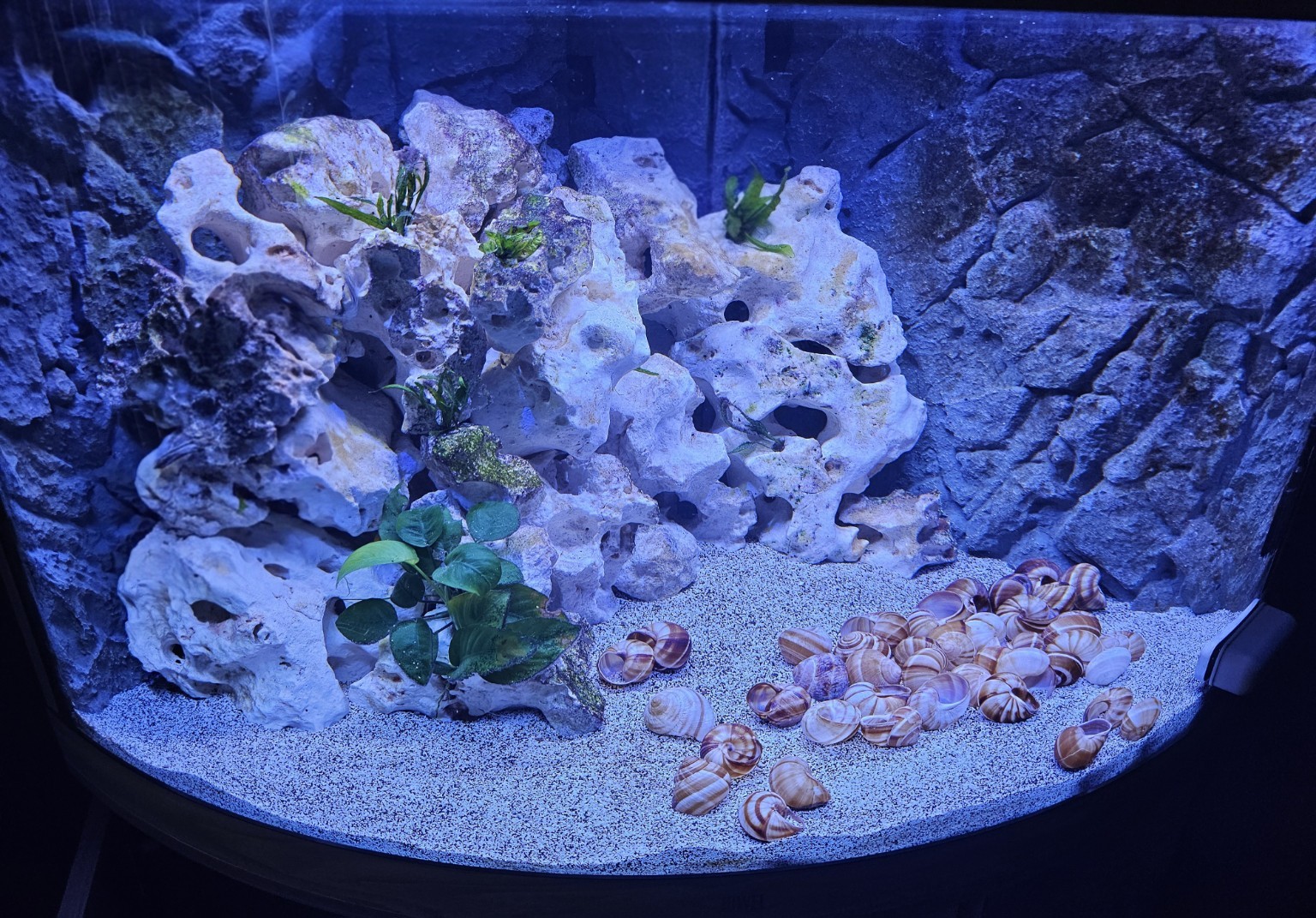
Start with the job that matters now. Every route connects to the next useful decision.
Explore Stonehouse development and carefully selected dry-goods routes without a generic catalogue.
Open product discovery → 02Connect cycling, livestock, equipment and care around one aquarium.
Open All-in-One → 03Use UK-focused guidance, calculators and structured troubleshooting.
Search knowledge → 04See the commercial routes, data standards and brand-safe partnership journey.
Partnership overview →The Clean Water Project brings durable, laser-engraved reusable steel products into Stonehouse—helping customers reduce reliance on disposable drinks containers while supporting a more responsible relationship with rivers, oceans and everyday water.

Bioflow M is being developed around maintenance access, real filter fit and an open evidence trail. The product launches only when compatibility, materials, instructions and commercial details are ready.
The useful part is how each area leads somewhere: learn, record, compare, decide, then buy for a reason.
Save a branded preset or custom aquarium and use it as context across the site.
Create my aquarium → 35 profilesFilter freshwater and marine profiles by experience and review licensed photographs.
Browse species → Explain the reasonsMove beyond red or green and understand the conditions behind a pairing.
Check compatibility → Structured triageOrganise symptoms, changes and measured water conditions without fake diagnosis.
Investigate a problem → Build confidenceFollow practical learning paths and connect lessons to the aquarium tools.
Start learning → Plan with numbersEstimate volume, water changes, heating, running cost and more.
Open calculators →Stonehouse is building a UK online-first route where approved specifications, compatibility, education, installation and after-sales information work together. Partnership routes include authorised retail, dropship and product development—subject to clear terms and evidence.
Join for product progress, useful aquarium updates and launch news. No invented dates and no constant sales messages.
A return-visitor dashboard connecting tank records, maintenance, learning, compatibility and shopping.
Continue from the aquarium you saved, review the next useful task or explore every Stonehouse tool from one place.
Academy progress, practical calculators, saved aquarium builds, the product ecosystem and the Stonehouse assistant connect to your aquarium tools.
Complete the core setup to unlock a useful routine.
0% complete
Build a practical equipment and care outline.
Structured troubleshooting, without fake diagnosis.
Plan and tick off recurring jobs.
Record milestones, livestock and changes.
Fish, plants, coral, chemistry and equipment.
A staged showcase ready for future uploads.
Compare only verified specifications.
Preview a future loyalty programme.
Your Tank Passport now drives cycling, livestock planning, equipment checks, maintenance, learning and suitable shopping actions from one working command centre.
Turn water readings into a dated establishment record—without declaring a tank safe from one result.
Build group sizes against the active aquarium, then expose system, space, temperature and pairing conflicts.
Check the aquarium you actually own, explain each gap and move only missing essentials into the customer-controlled basket.
These routes adapt to the active aquarium and saved records instead of leaving customers at a dead end.
This is not one generic shopping list. System type changes the life-support requirements, experience changes the level of control, and budget changes where to use simplicity, adjustability or redundancy.
Choose the aquarium, volume, experience and budget. The result will explain what changed, what is essential now and what can wait.
Record the symptom, timeline, affected animals, visible signs, recent changes and measured conditions. The response changes according to the evidence entered.
The result will contain urgency, immediate actions, likely cause categories, next checks, cautions and evidence to collect.
Choose a tank, install a routine, learn how every job should be performed and keep a dated completion history. Frequencies are starting points—not fixed rules.
Stonehouse reviews are designed to show where, how and for how long a product was used, helping hobbyists judge relevance to their own aquarium.
Stonehouse is building an independent, online-first aquarium platform for UK keepers—connecting accurate product data with education, compatibility, installation, maintenance and honest evidence.
Products are represented through confirmed specifications, model compatibility, maintenance requirements, warranty support and real aquarium context.
Recommendations prioritise animal welfare, technical suitability, maintainability, customer needs and confirmed product information. Clear evidence creates better customer outcomes and stronger long-term supplier relationships.
Every route remains subject to written terms, accurate stock information and brand approval.
Selected products purchased on agreed trade terms and presented with verified specifications.
Supplier-fulfilled lines with agreed dispatch times, approved packaging and clear returns ownership.
Testing, technical feedback, content or component collaboration with evidence and claim boundaries agreed first.
Category, territory, customer need and commercial route.
MOQ, carriage, feed, lead times, warranty and returns.
Images, specifications, claims, restrictions and attribution.
Controlled publication, service monitoring and structured feedback.
Trade price list, VAT basis, MOQ, carriage threshold, payment terms and promotion restrictions.
UK delivery areas, stock-feed method, dispatch service level, damage process, warranty and returns route.
SKUs/EANs, dimensions, compatibility, approved claims, image-use permission, attribution and brand rules.
Structured product pages, contextual education, careful claim handling, approved asset use, discoverability through aquarium problems and a documented feedback route.
Share your range, operating model and data format. Stonehouse will reply with fit questions rather than promise a listing before the details are understood.
Community voting and editorial feature.
Verified customer photos linked to exact models.
Tank journeys with dates and honest context.
Future uploads will require consent, moderation, ownership confirmation and an option to remove content. Until a secure backend exists, uploads are not falsely presented as live.
This page compares three buying routes for organising filter media. It separates what Stonehouse has physically prototyped from what still needs production confirmation, and shows customers the questions that matter before spending money.
| Decision point | Stonehouse Bioflow M | Original media arrangement | Generic caddy |
|---|---|---|---|
| Purpose | Prototype removable media-layer organiser for the named filter route. | Use the aquarium/filter maker's intended media arrangement. | Third-party organiser; design and intended use vary. |
| Fit certainty | ◇ Exact release dimensions and compatible models remain gated. | ↗ Confirm from the original manufacturer for the exact model. | — Check the seller's written dimensions and model list. |
| Media access | ✓ Removable layers are visible in the documented prototype. | ↗ Depends on the original basket, sponge and media layout. | — Depends on the actual caddy design. |
| Configuration | ✓ Modular arrangement explored; final supplied media is not yet announced. | ↗ Manufacturer-defined and may be model-specific. | — Often customer-defined; instructions and safe loading vary. |
| Evidence available | ✓ Dated prototype, installation, 24-hour and Day 7 journal evidence. | ↗ Manufacturer manuals and retailer information. | — Seller listing, reviews and any test evidence supplied. |
| Maintenance route | ◇ Final cleaning and replacement instructions required before sale. | ↗ Follow the original manufacturer schedule and instructions. | — Confirm access, cleaning and media-retention instructions. |
| Support route | ◇ Planned Stonehouse model/photo pre-purchase check. | ↗ Manufacturer or authorised retailer route. | — Depends on seller identity and after-sales policy. |
| Spares and warranty | ◇ Terms, spares and remedy route must be published before launch. | ↗ Check the maker's current UK terms. | — Check seller terms; do not assume filter warranty compatibility. |
| Price | ◇ No price shown until production and commerce are confirmed. | ↗ Varies by model and retailer. | — Varies by seller and included parts. |
| Best fit for | Customers who value documented development and a clear support route once released. | Customers who prefer the original documented configuration. | Customers able to verify fit, materials, instructions and support independently. |
| Main limitation today | Not yet released; compatibility and commercial claims remain blocked. | May offer less configuration flexibility, depending on the model. | Evidence quality and after-sales consistency can vary significantly. |
You want removable-layer organisation, documented development and Stonehouse support—and are willing to wait for the exact model, dimensions, instructions and price to be released.
You want to follow the filter manufacturer's documented configuration, or cannot yet verify that a change preserves safe fit, flow and warranty conditions.
The seller provides exact dimensions, material information, usable instructions and a credible UK after-sales route for your specific installation.
Each claim should trace to Stonehouse's dated prototype record, a current manufacturer document or clearly identified seller information.
An observed prototype feature is reported as observed. It is not silently converted into a production, performance or compatibility promise.
Specifications, rights, UK support, price and release status must be reviewed again before a product can become purchasable.
Stonehouse welcomes written specifications, compatibility data, approved images, brand rules, UK warranty routes, stock feeds and test evidence. Supplied information remains attributed and still passes the same review gate.
Search across starter topics and jump directly into the relevant tool or shop route.
Start with observations and water quality.
Build an equipment and maintenance outline.
Reduce uncertainty before ordering.
Understand ammonia, nitrite, nitrate, bacterial colonisation and why a newly filled aquarium is not automatically ready for livestock.
Use repeated readings, species requirements and the aquarium’s normal baseline instead of chasing one universal pH or nitrate number.
Avoid replacing every mature media component at once. Keep established biological media wet and minimise unnecessary disruption.
Volume is only one screen. Footprint, territory, swimming behaviour, social structure and waste production all affect suitability.
Plan temperature, water chemistry, lighting and quarantine. Never add transport water blindly or treat acclimation as one fixed recipe.
Observe livestock, service equipment according to load, record changes and avoid changing several variables without a reason.
Stonehouse summaries should help customers understand information, while important species, welfare and health decisions remain linked to established reference sources.
Preview points saved on this device
100 points to first preview tier
A dated history helps customers connect changes in livestock, equipment, maintenance and water quality instead of relying on memory.
Full lessons, habitat explanations, practical articles and quizzes—connected to the tools customers use on their own aquarium.
Practical estimates for volume, water changes, filtration, heating, aquarium weight, salt mixing, RO blending and running costs.
Choose the system and livestock direction first. Stonehouse then builds an evidence-led requirement plan and a separate recommended-equipment basket that you remain in control of.
Your plan will cover livestock constraints, filtration, heating, lighting, substrate, cycling, maintenance and an explained equipment recommendation basket.
A planned family of caddies, replacement parts, media packs and maintenance accessories, with release status shown honestly.
A membership framework linking learning, maintenance, saved aquariums, early releases and future customer benefits.
Tank Passport, journal, calculators, Academy progress and saved builds on this device.
Planned cloud sync, printable packs, launch access, member offers and expanded learning.
Planned specialist sessions, deeper tools, priority support and exclusive releases.
This local prototype uses your saved Tank Passport and structured safety rules. A future hosted AI version can connect to the reviewed Knowledge Hub.
Use the shop, learning, planning, care and account areas without hunting through menus.
Today’s care, progress and saved aquariums.
Stonehouse development, selected products, compatibility and wish list.
35 mobile-first freshwater and marine profiles.
Search guides, water and equipment.
Structured learning paths and progress.
Volume, heating, turnover, cost and more.
Plan and save complete aquarium setups.
Compare temperament and husbandry conflicts.
Context-aware, safety-first guidance.
Recurring care tasks and reminders.
Keep the aquarium’s long-term history.
Protect local records and prepare for cloud sync.
Private operational dashboard preview.
Compare two livestock profiles and optionally screen both against the active Tank Passport. This is a planning filter, not a guarantee of behaviour.
The colour is the overall result. The detailed checks beneath it explain the exact water, size, behaviour, social and aquarium-footprint reasons.
No major conflict identified in the information currently entered.
Possible with conditions, more information or careful management.
A major welfare, water-system, size or space conflict is present.
Select two species to see system, space, water, size, temperament, social and special-risk checks.
A planned collection of reusable, laser-engraved stainless-steel essentials—created to help customers rely less on disposable drinks containers while keeping every material, claim and supplier standard visible.
Plastic pollution is not only an ocean problem. Lost and discarded items can move through streets, drains and rivers, fragmenting into smaller pieces along the way. The connection is real—but so is the need to speak carefully about what one product can achieve.
A bottle, mug or flask only earns its place when it is used repeatedly and cared for. The project starts with durable everyday objects—not a claim that buying more is automatically better.
Why precise claims matter ↗The Environment Agency describes plastic pollution as a serious and growing problem in rivers. Plastic can harm wildlife and slowly break into microplastic fragments; prevention matters before litter reaches the water.
Read the UK evidence ↗Corals are animals that build extraordinary habitats. NOAA reports that reefs cover less than 1% of the ocean floor yet support about 25% of marine creatures, while pollution is one of several human pressures they face.
Explore NOAA coral science ↗That is why this project will never suggest that a purchase “saves the ocean”. Its purpose is more grounded: help one reusable object stay in use, make the supply chain visible and keep the wider water story impossible to ignore.
Aquariums make the health of freshwater and marine environments impossible to ignore. This project takes that concern beyond the tank and into a simple daily habit: choosing a reusable vessel when it genuinely replaces a disposable one.
Products are screened for practical longevity, care information and access to replaceable components where available.
The established SA house mark provides a subtle premium engraving while the full Stonehouse identity remains the master brand.
Future listings must state capacity, dimensions, material grade, contact surfaces, lid construction, care and warranty.
Verified supplier documents, fulfilment data and customer-use evidence will replace assumptions as the range develops.
Concept visuals only. Final imagery, specifications, pricing and checkout remain locked until supplier verification and photo rights are complete.
Planned insulated stainless bottle with a supplier-documented food-contact interior and practical replacement-lid route.
Planned leak-resistant reusable mug. Seal, lid materials and leak-test method must be published before sale.
Planned larger-format flask for shared drinks and longer days, with verified capacity and thermal test conditions.
Planned double-wall press with replacement-mesh research, exact steel specification and safe-use instructions.
Planned fine-mesh infuser sized from real measurements, with material and cleaning guidance confirmed.
Stonehouse will describe the specific behaviour a product supports—not promise that a purchase cleans an ocean, removes microplastics from the body or is automatically sustainable.
Future counters will activate only when the calculation method, date range and underlying records can be audited. No donation or cleanup promise will appear without a real agreement and transparent accounting.
Food-contact documentation, exact steel grade, coatings, lid and seal materials, batch traceability, capacity and dimensions.
UK delivery windows, tracking, secure packaging, defect handling, warranty support and a clear returns address.
Approved engraving templates, repeatable placement, pre-production sample, blind dropship capability and licensed product photography.
Stock feed, dispatch confirmation, cancellation handling, replacement parts and accountable service contacts.
Once supply and safety checks are complete, Stonehouse can explore small-batch logo engraving without separating the Clean Water Project from the trusted Stonehouse customer journey.
Stonehouse products connect specifications, fit information, installation guidance, maintenance and real development evidence in one place.
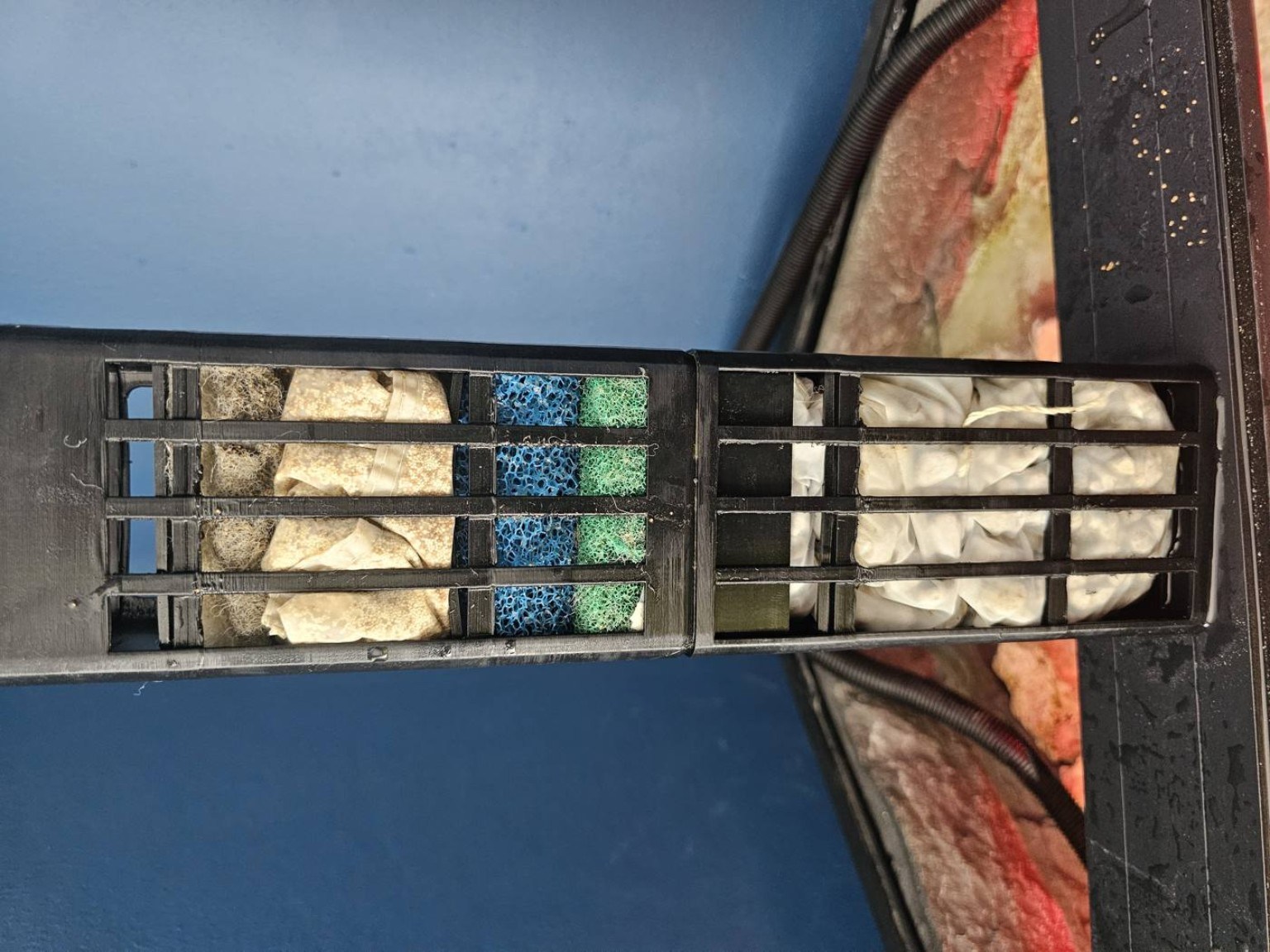
A removable two-part media system developed to make filter-media organisation, access and servicing more practical.
Final compatibility, material specification, instructions, production checks and pricing will be published before customer release.
The concept separates filter media into removable sections while keeping the development record visible. Claims about flow improvement, capacity and long-term durability stay excluded until they are measured and documented.
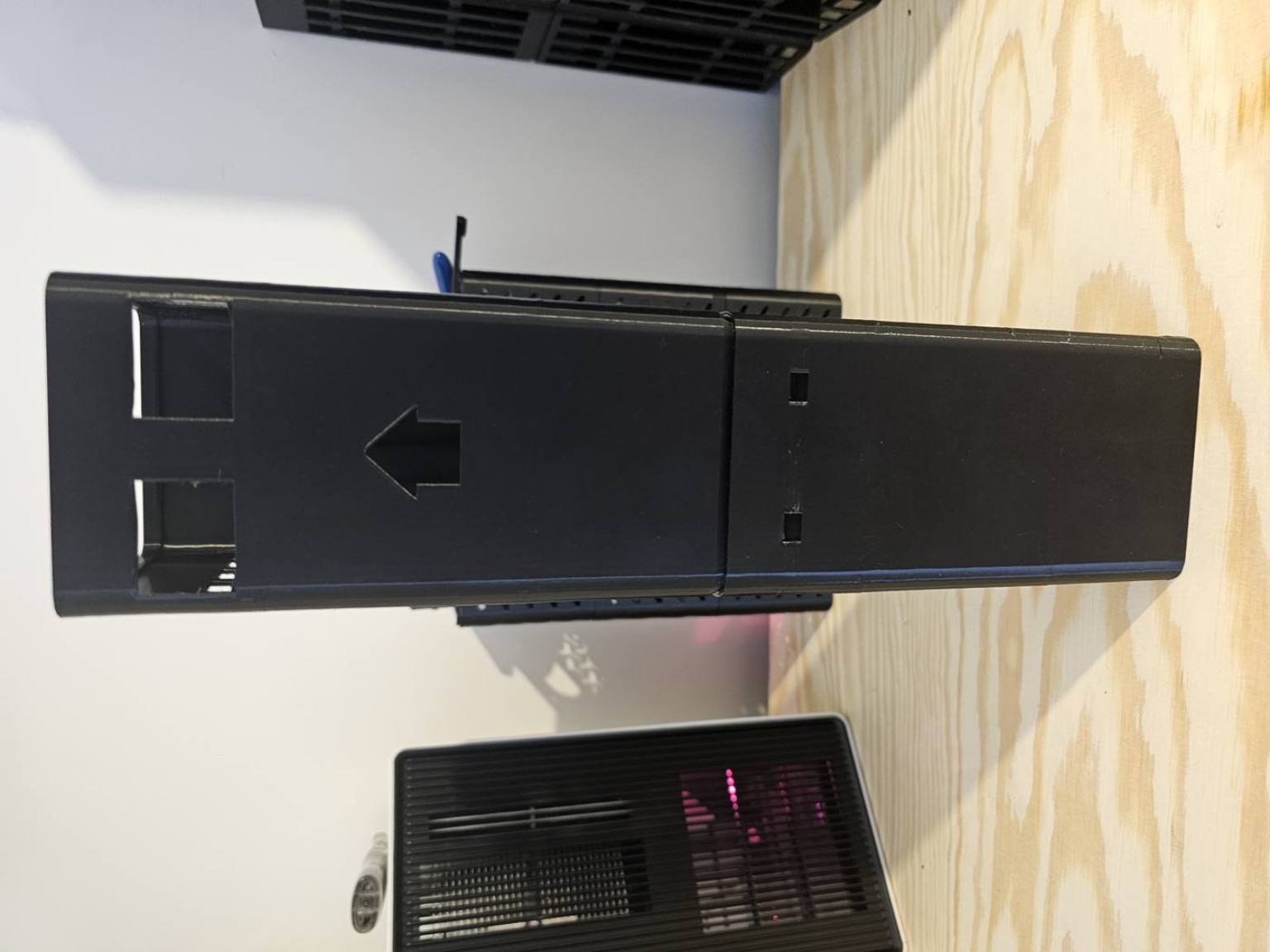
Upper and lower sections with internal media support.
Fit, handling and servicing are under observation.
The final production material and care limits will be documented.
Caddy, shelves and instructions remain subject to release specification.
This prototype follows the Bioflow M development route. Release compatibility will identify exact housings, dimensions, revisions and exceptions.
Drag the handle to compare the installation-day aquarium with the approximately 24-hour follow-up. The Day 7 image is displayed separately. These are observations from one aquarium—not guaranteed performance figures.
(2).jpg)
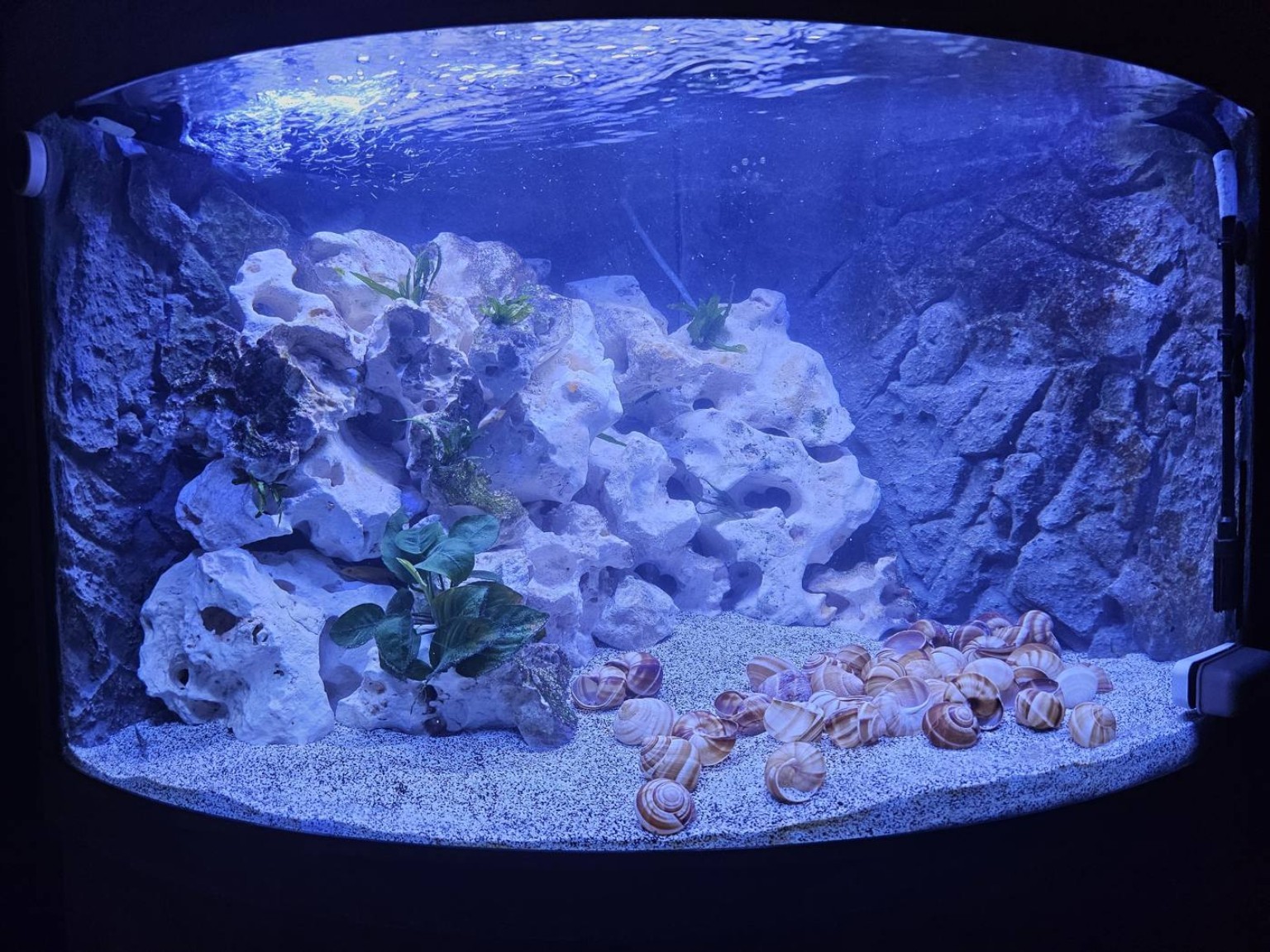
The aquarium appears visibly clear in this photograph. Lighting, maintenance, feeding and other variables may also influence appearance, so the image is presented as a dated observation rather than isolated proof.
Inspect and clean according to debris load rather than a fixed universal schedule.
Keep established media wet in aquarium water and avoid replacing everything at once.
Check for deformation, trapped debris, wear and unrestricted seating during servicing.
No. It remains in development and live aquarium testing. The page collects launch interest only.
No. The development photographs record visible conditions in one aquarium. They do not prove a guaranteed or isolated performance result.
No affiliation or manufacturer endorsement is claimed. It is an independently developed accessory route.
The final contents and any optional media packs will be published once supplier and release decisions are complete.
Replacement shelves and service components are planned, but the exact range will be confirmed before release.
Local backup works now. Cloud accounts and multi-device sync are architected as the next hosted integration.
Tank Passport, journal, maintenance, timeline, Academy, rewards, builds and wish list can be exported together.
A front-end operational framework for products, orders, support, suppliers, warranties, returns, content and campaigns.
A polished front-end experience connecting search, tank care, planning, products and personal progress. Live accounts, checkout and cloud services remain clearly separated until connected.
Your Tank Passport and latest activity will appear here.
Find fish, tools, guides, products and troubleshooting routes in one search.
Plan volume, livestock, equipment and compatible accessories.
Tank Passport, journal, maintenance, rewards and saved content together.
Gallery, compatibility, fitting guidance, care, FAQs and related products.
Suggestions based on your saved tank—not random upselling.
Turn water readings into a clear, cautious overview with next steps.
This educational score is not a diagnosis. It highlights common freshwater risk signals and directs users toward appropriate guidance.
These preview suggestions use locally saved Tank Passport information. Real stock, pricing and commercial recommendation rules require the shop integration.
Create multiple branded or custom tanks, add photographs, select the active aquarium and connect its equipment, livestock and water context to the rest of Stonehouse.
Save readings against your aquarium, compare them with its normal baseline and record what changed around each test.
Search freshwater and marine starter profiles, switch units and connect them to your saved aquarium for an initial system and volume screen.
Useful community knowledge can make Stonehouse stronger, but nothing submitted here becomes public automatically. A future AI evidence screen can organise the checks; the final publishing decision remains with Stonehouse.
Create clear feeding, checking and emergency instructions without giving a temporary carer unnecessary tasks.
Choose a route, include the useful context once and keep a copy of your enquiry. Live case submission activates only after the secure helpdesk connection is verified.
support@stonehouseaquatics.co.uk
Use this as the public support mailbox after IONOS sending and receiving, SPF, DKIM and DMARC have been verified. Keep Gmail private for account recovery.
Open your email appFor compatibility: exact aquarium and filter model, dimensions and a clear photograph.
For livestock or water: test results, temperature, aquarium volume, species and recent changes.
For a correction: the page title, disputed wording and the source you want reviewed.
No. The site helps organise observations and water-quality information. Severe distress, poisoning, rapid losses or uncertain treatment needs qualified aquatic veterinary help.
Not until live prices, stock, delivery terms, payment and checkout are connected and clearly marked active.
In this static release it stays in your browser unless you export it. Cloud accounts require the secure database and authentication launch phase.
Select “Information correction” or “Privacy or image rights” and include the exact page or image. Licensed media records retain creator, source, licence and modifications.
This page sets the honest static-site position. Final commerce, returns and delivery wording will be completed against the actual selling systems and terms.
Tank Passport, journal, maintenance, builds and preferences are currently stored in your browser. They are not automatically uploaded to Stonehouse. Users can export or remove local records.
Contributions remain private drafts until species identification, evidence, rights and safety have been reviewed. Uploaders must own any photograph they submit and grant Stonehouse permission to use an accepted contribution. Copied search-engine, retailer, social-media, book, manufacturer, watermarked, stock-preview or otherwise unlicensed images are not accepted. Open-licensed does not mean copyright-free: every open-licence photograph requires a provenance record and visible credit containing the creator, source, exact licence and whether Stonehouse changed it. Customer originals are labelled “Used with the photographer’s permission” rather than open-licensed. Licensed stock media requires the supplier, asset reference, purchase or download date, commercial-use terms and retained proof of licence. Supplier media is labelled according to its written permission. Contact Stonehouse to question attribution, ownership or request future removal.
No points or discount are earned merely by submitting content. A first accepted contribution may qualify for one single-use, non-stackable 10% thank-you reward under the published launch terms. Accepted complete profiles and original photographs may qualify for the displayed points after identity, duplication, evidence and rights checks.
Email forms connect to Brevo only after a hosted form endpoint is configured. Consent wording, welcome emails and unsubscribe handling must be tested before launch.
Prototype photographs and observations are clearly separated from guaranteed performance claims. Final compatibility, specifications and instructions will be published before sale.
No live price, stock, checkout, delivery promise or paid membership is currently represented as operational.
A rapid general checklist for aquarium distress. This is not veterinary diagnosis and cannot cover every species or emergency.
Look for gasping, loss of balance, rapid breathing, unusual position, colour change, injuries and whether multiple animals are affected.
Check temperature, ammonia, nitrite, pH and oxygenation. Confirm equipment is running and no contaminant has entered the aquarium.
Where appropriate, increase aeration and use a controlled, conditioned, temperature-matched water change. Avoid random medication mixing.
Severe distress, rapid losses, poisoning or uncertain treatment needs qualified aquatic veterinary or experienced specialist help.
A transparent record of the original media problem, prototype construction, installation, approximately 24-hour follow-up and confirmed Day 7 aquarium observation.
The stock baskets and media arrangement were photographed first so the upgrade had a clear starting reference.
Dimensions, wall thickness, shelves, handling and the upper/lower joint were repeatedly refined before the live trial.
The prototype entered a stocked Lake Tanganyika aquarium so fit, servicing, visible water movement and real-use behaviour could be recorded.
The caddy was removed after one week, photographed from multiple angles and demonstrated in a short removal guide video.
A later image and video show the aquarium under red lighting, with a matching-light comparison still recommended.
Exact compatibility, material specification, production checks, instructions, warranty and support must still be complete before sale.
These images document the original baskets and media arrangement that were replaced by the Stonehouse modular caddy concept.
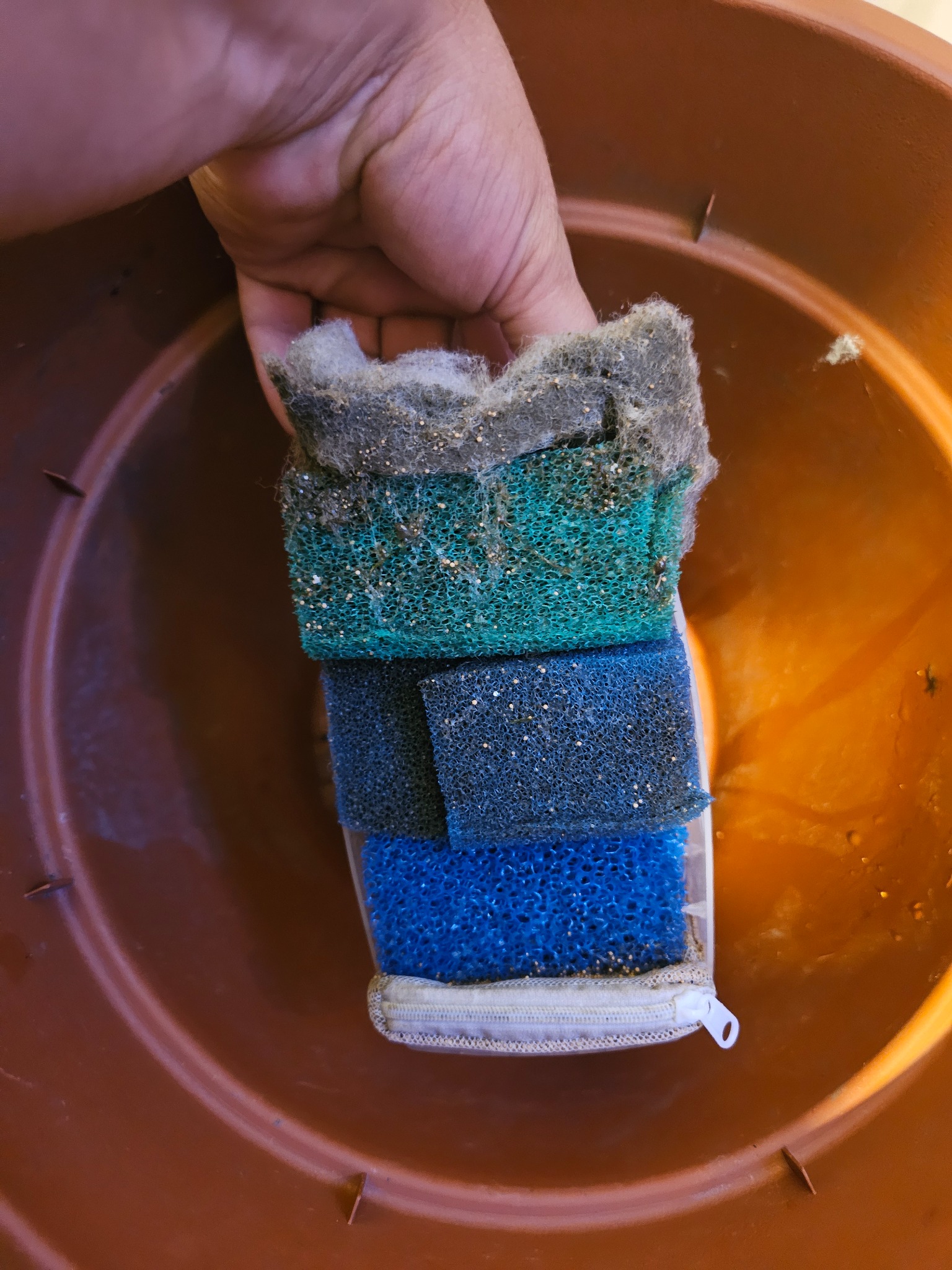
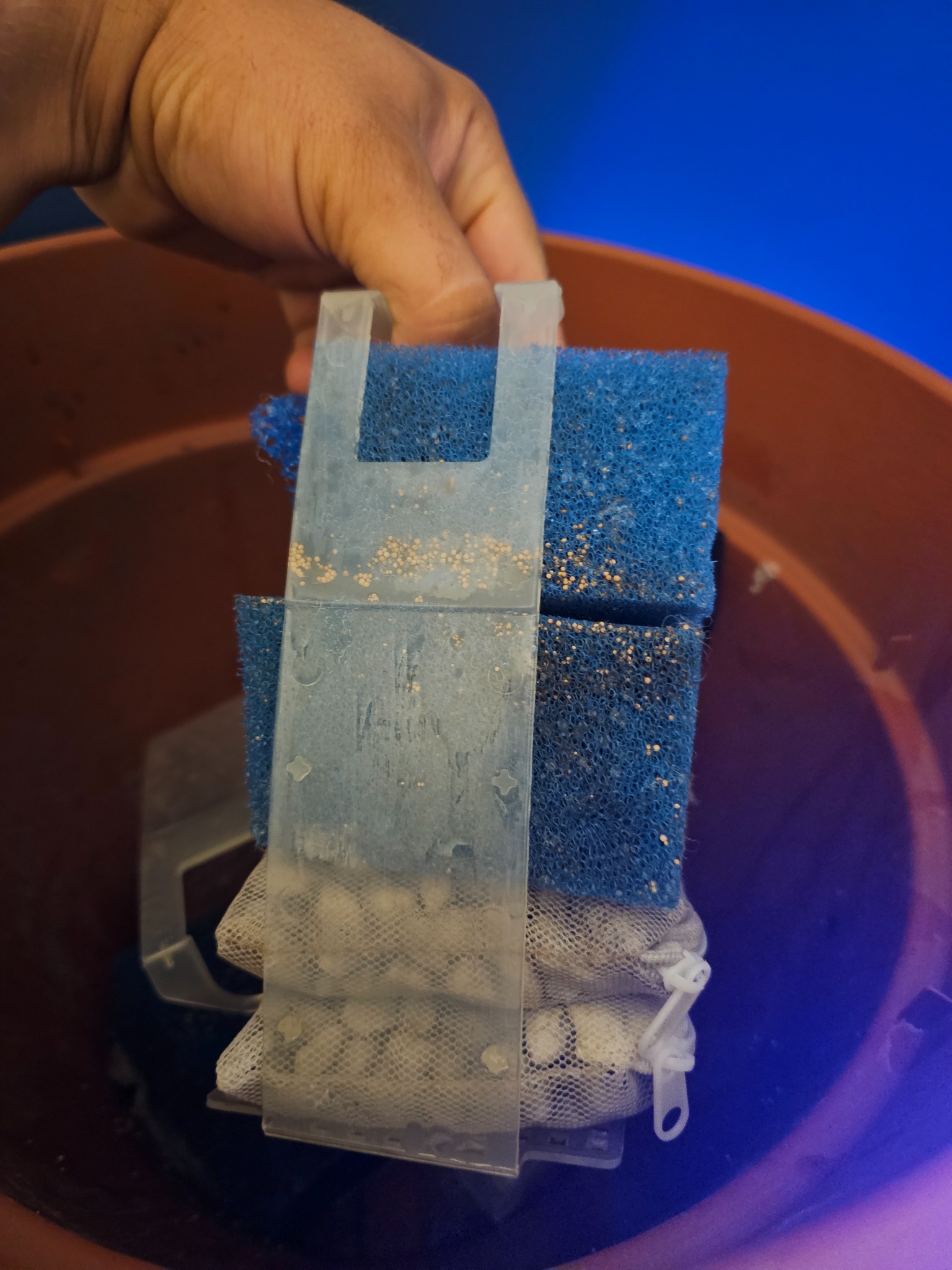
The previous media was removed, the prototype was loaded and the aquarium was photographed at the start of the trial.
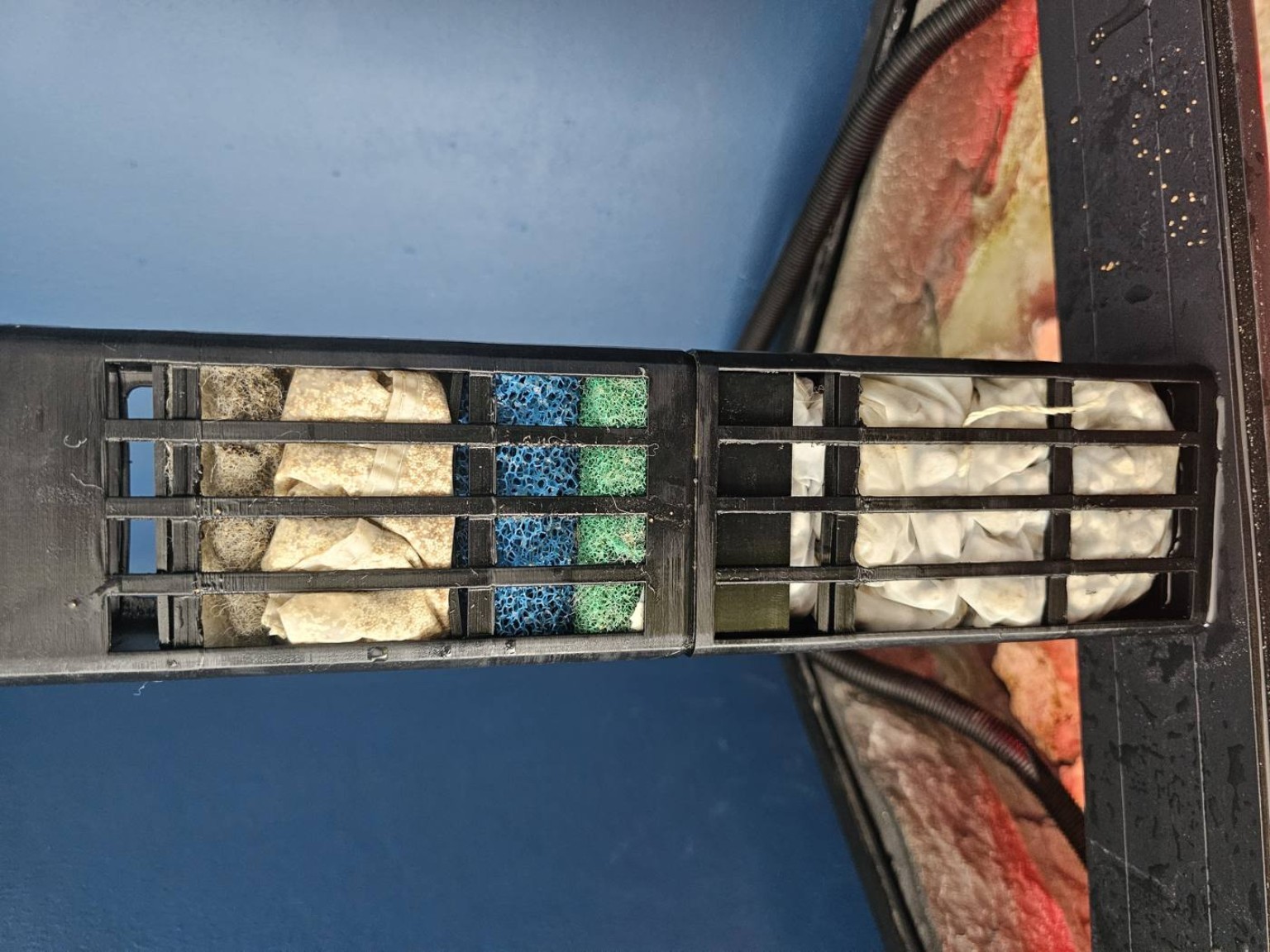
This clip records visible water movement with the prototype in place. It is useful practical evidence that the housing remained in operation, but it should not be interpreted as a measured flow-rate claim or proof of absolute filtration performance.
The image documents the visible condition of this aquarium at that moment. Lighting, camera position, feeding, maintenance and suspended debris can also affect appearance, so it is not presented as a controlled performance measurement.
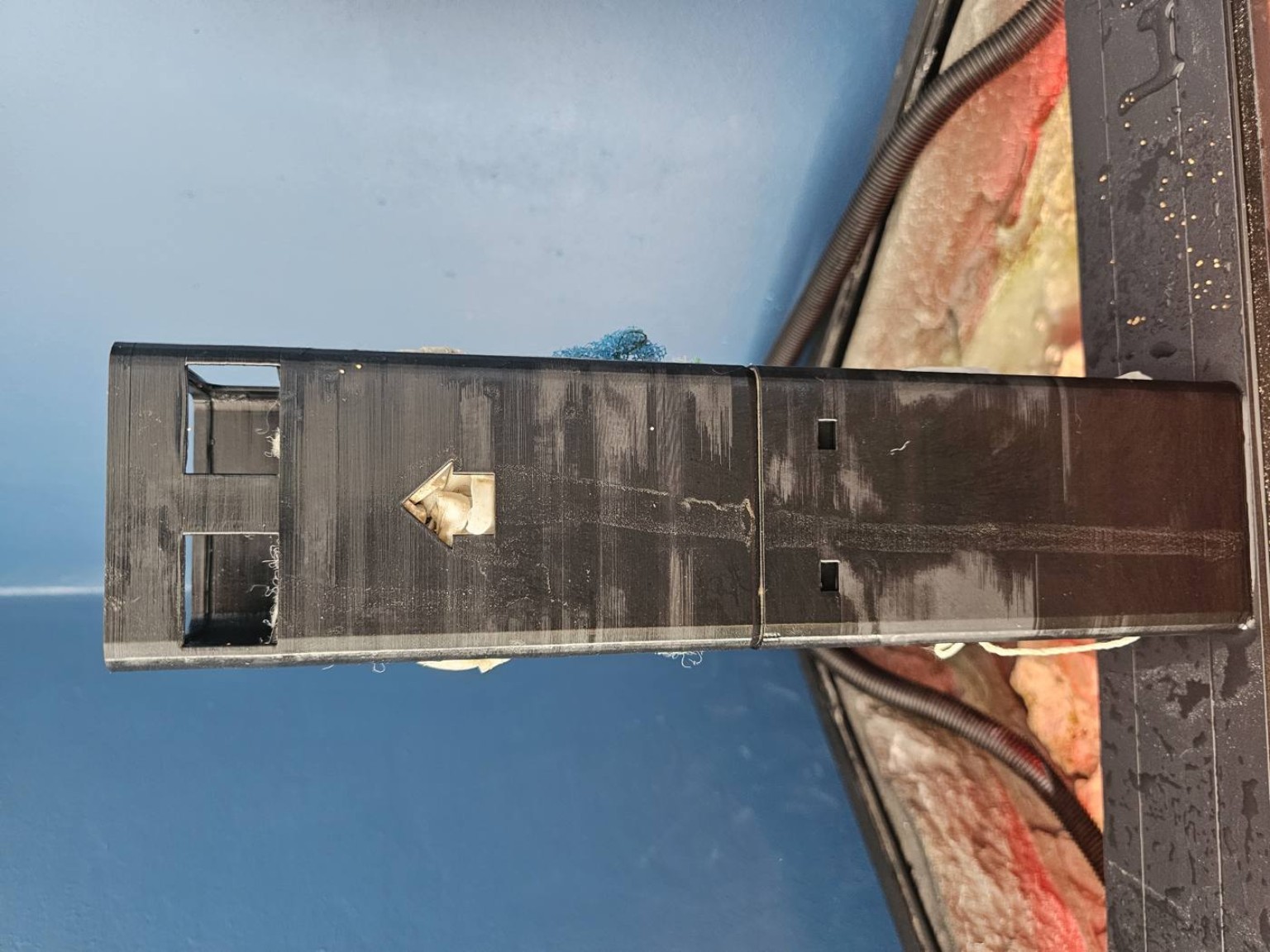
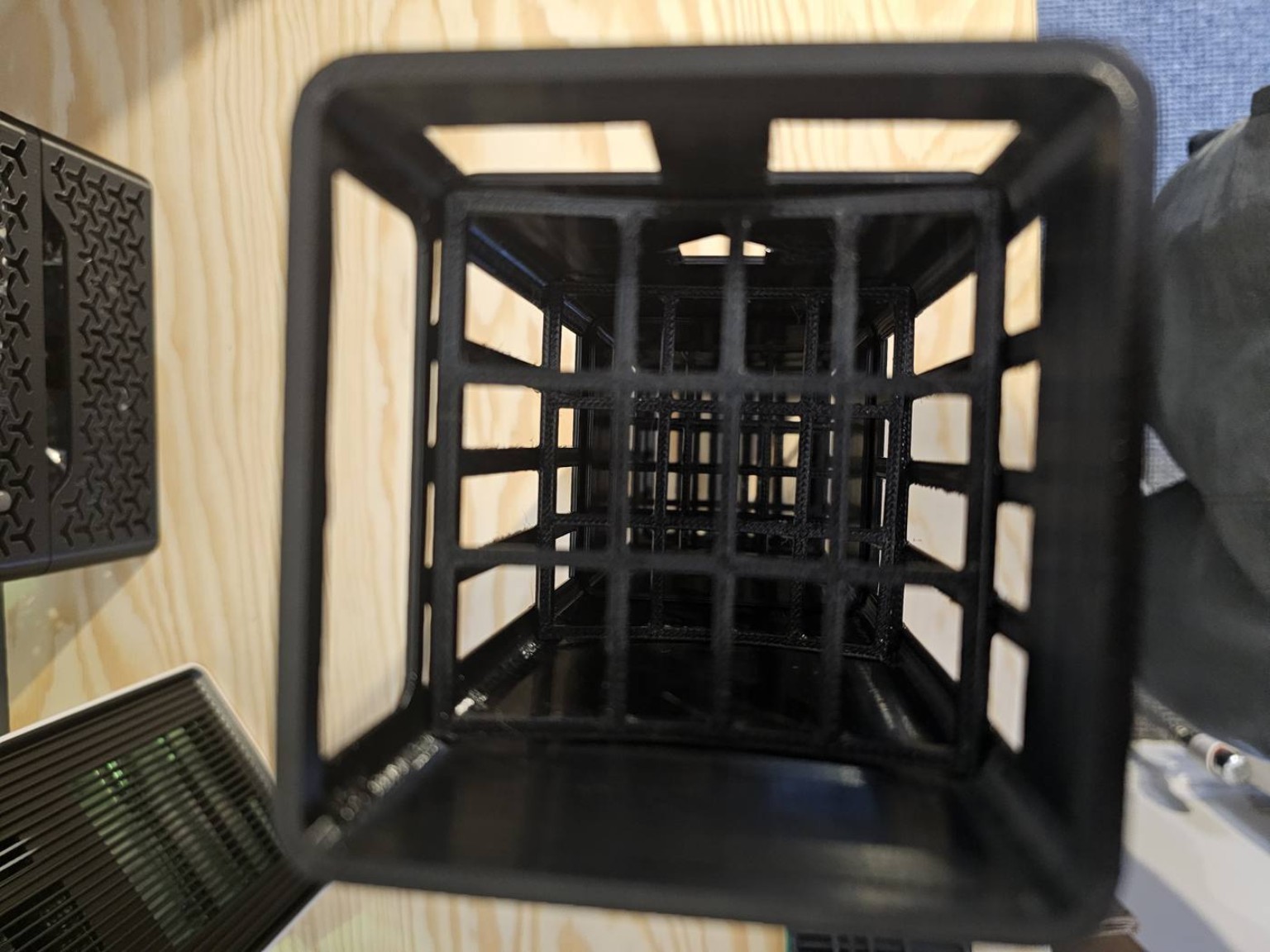
These images show the prototype after seven days in the aquarium, plus a short removal-guide video to document how it is lifted from the housing.
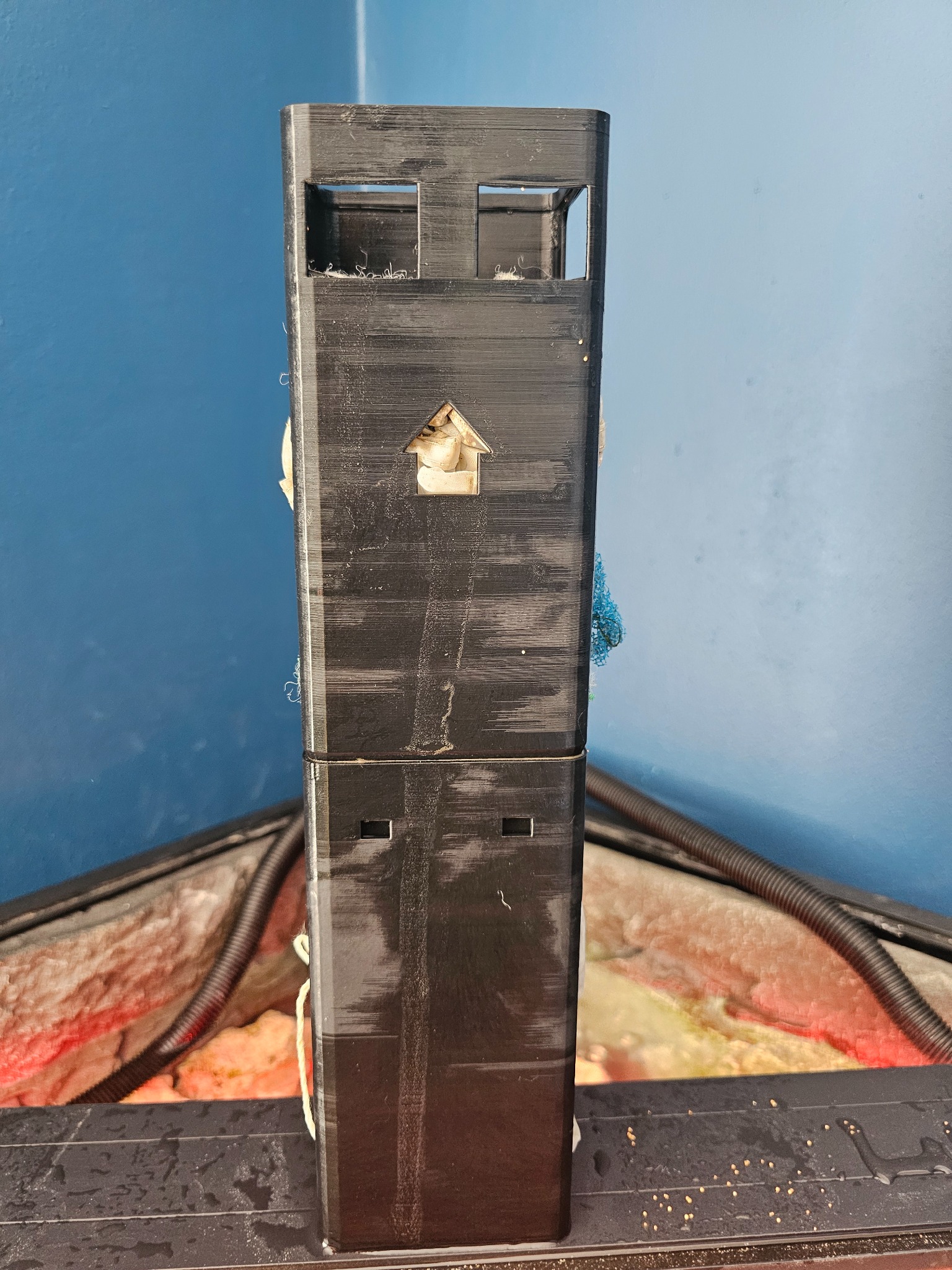
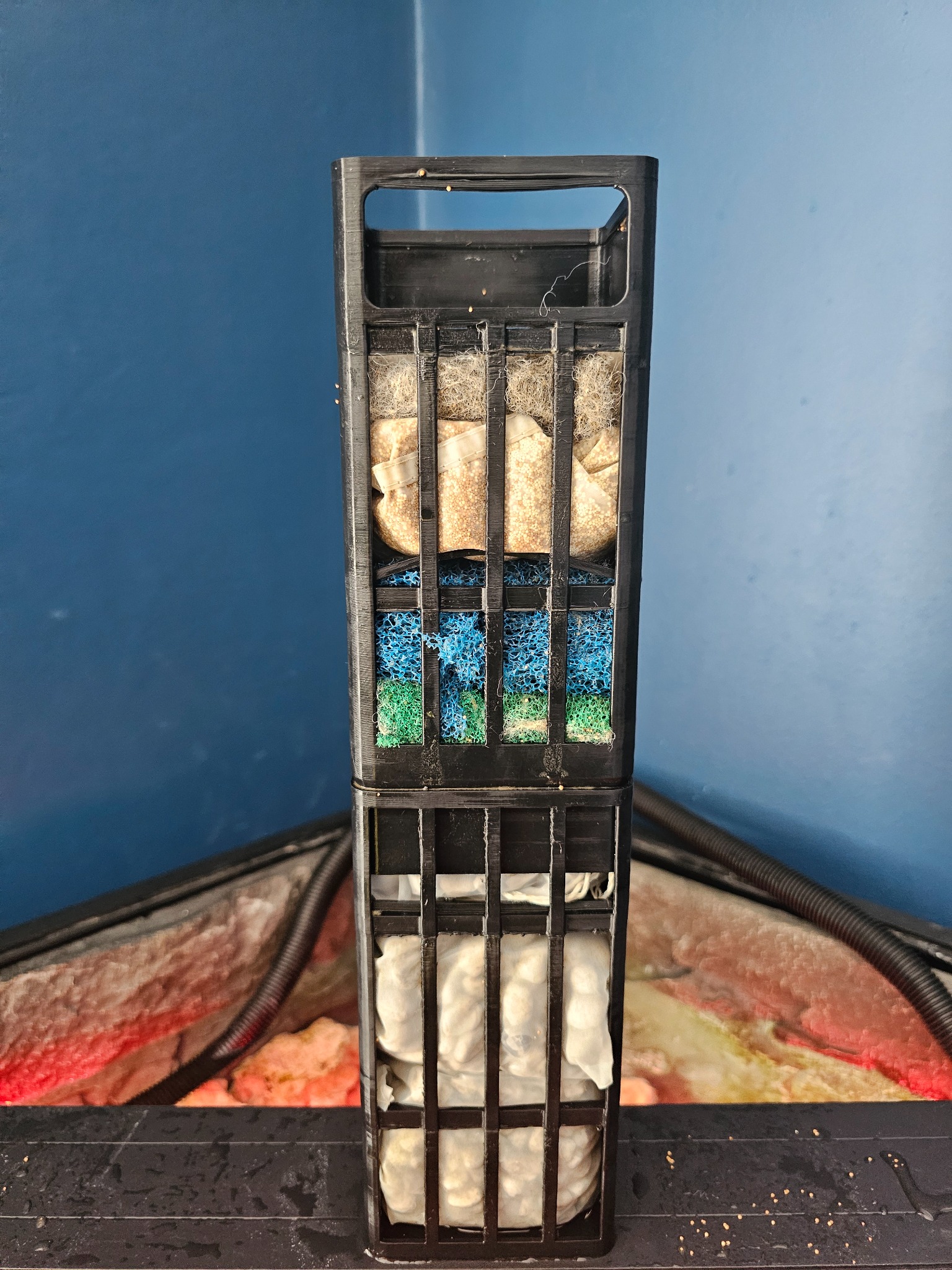
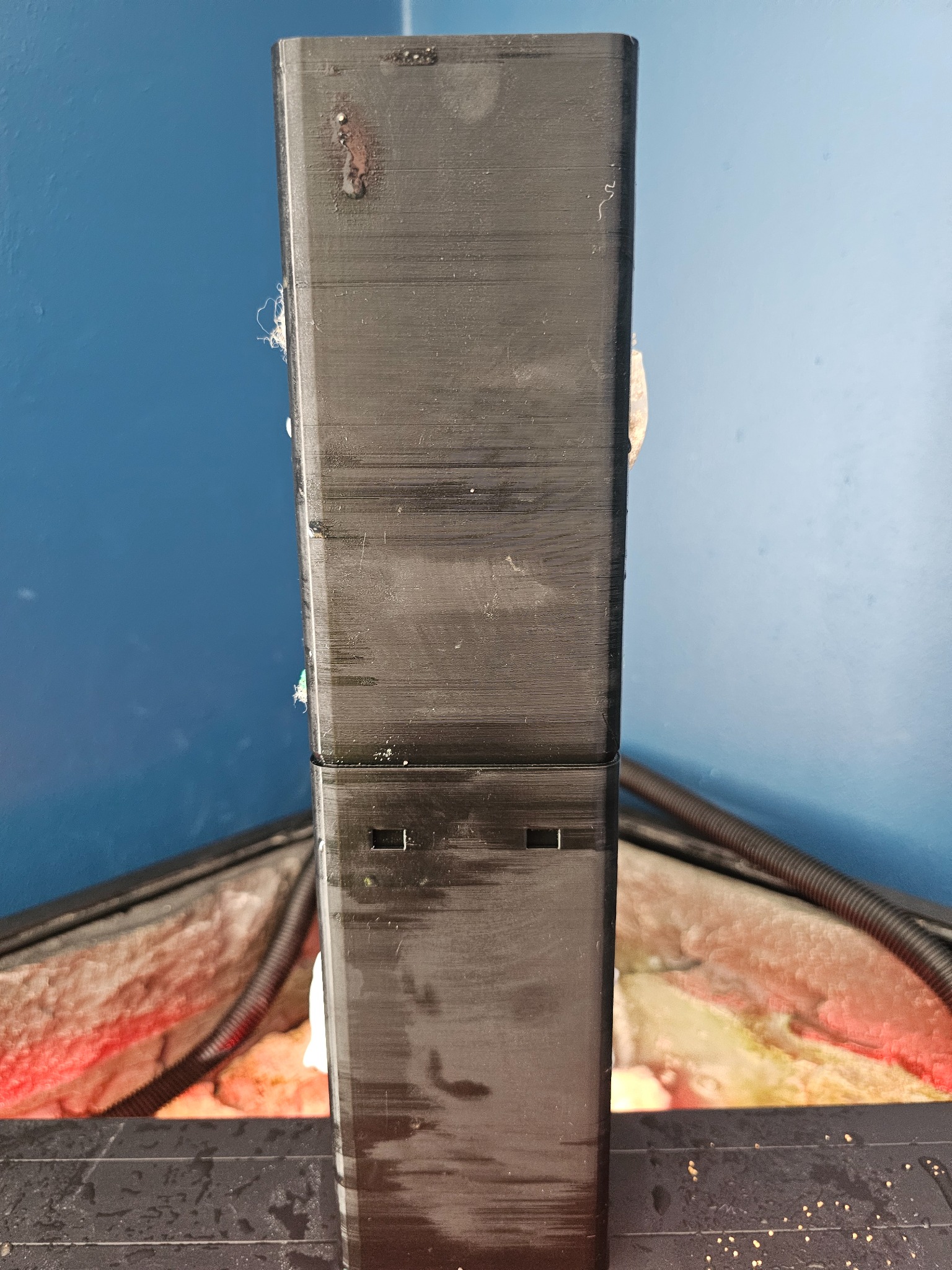
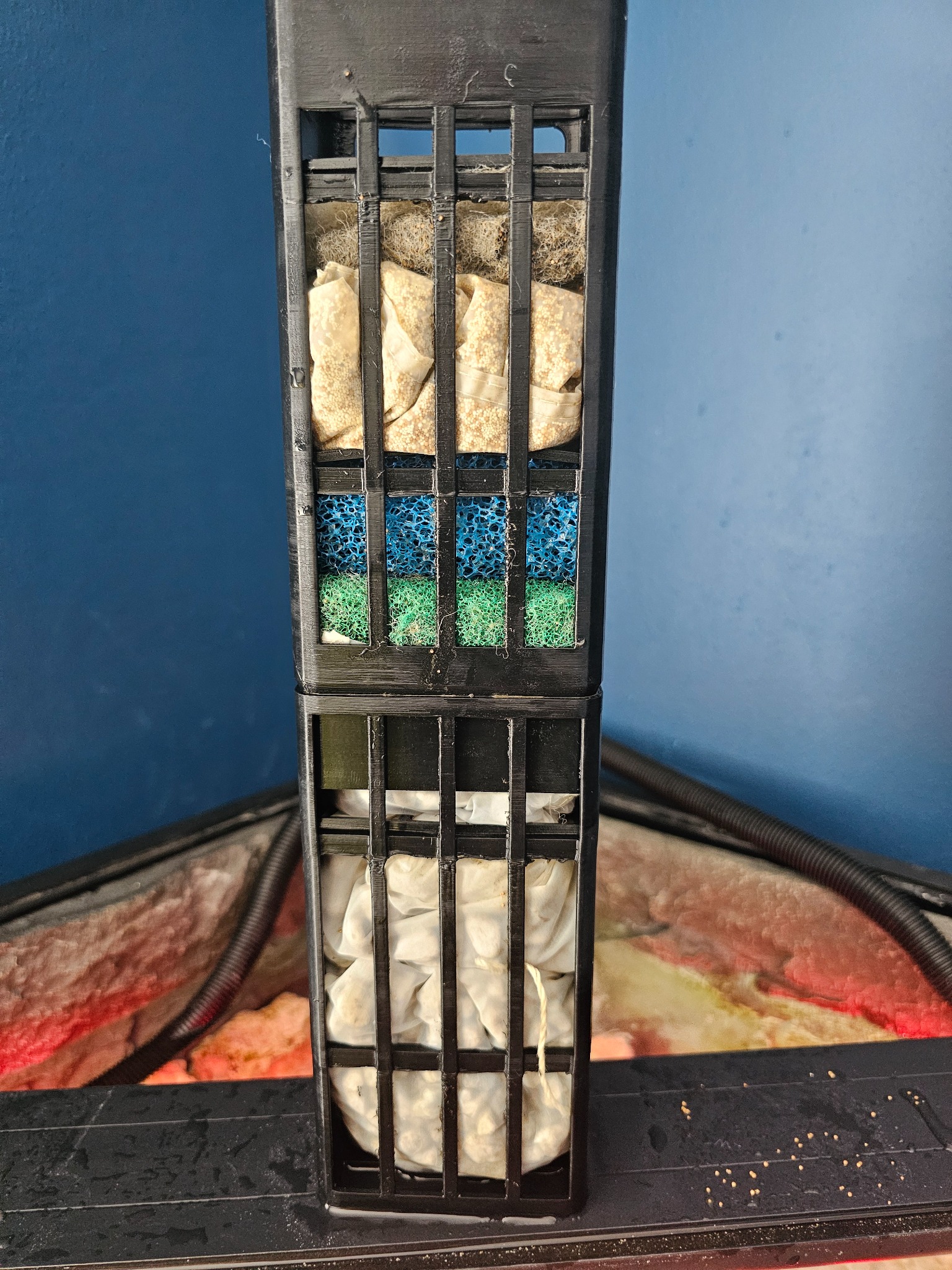
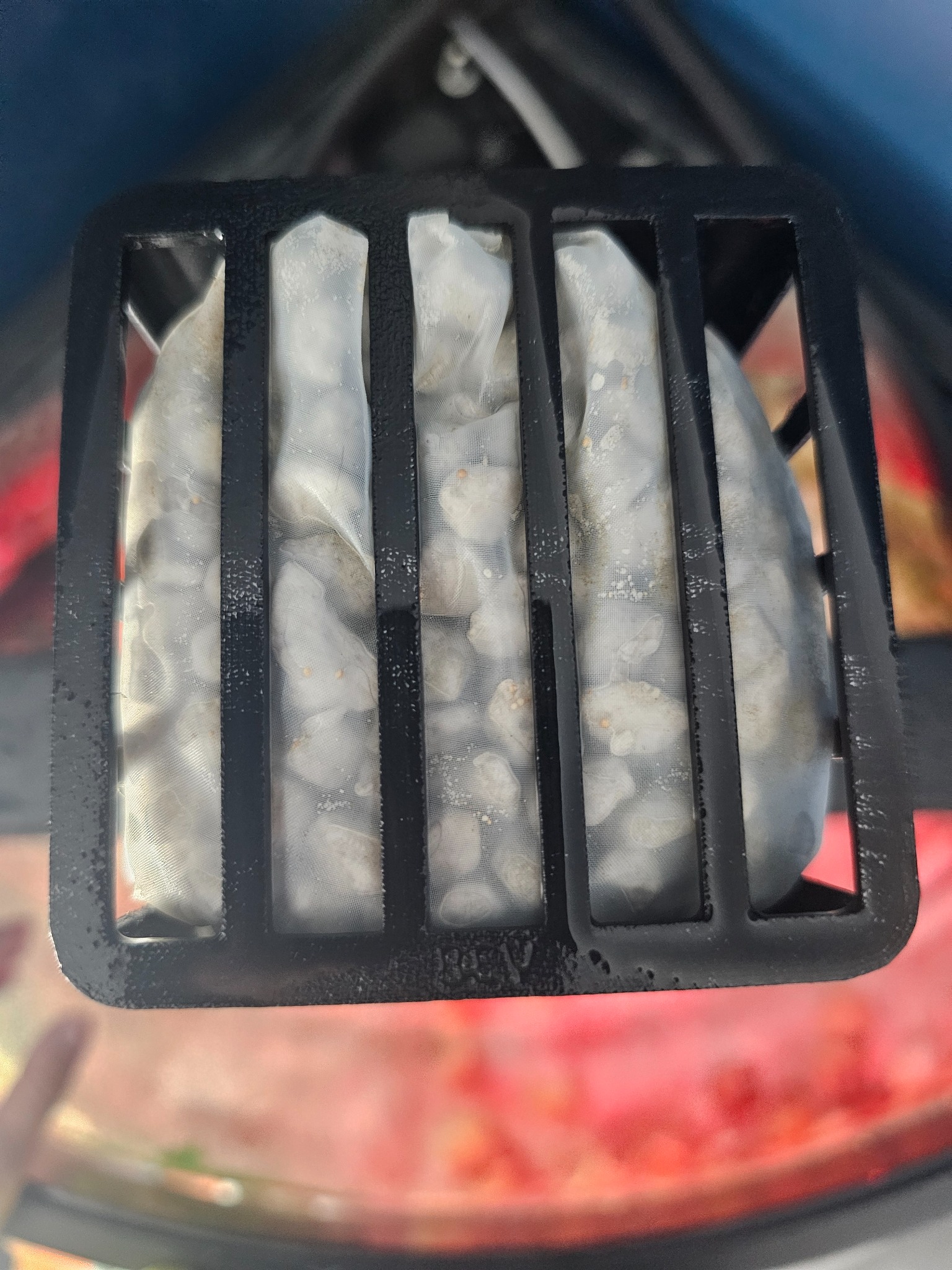
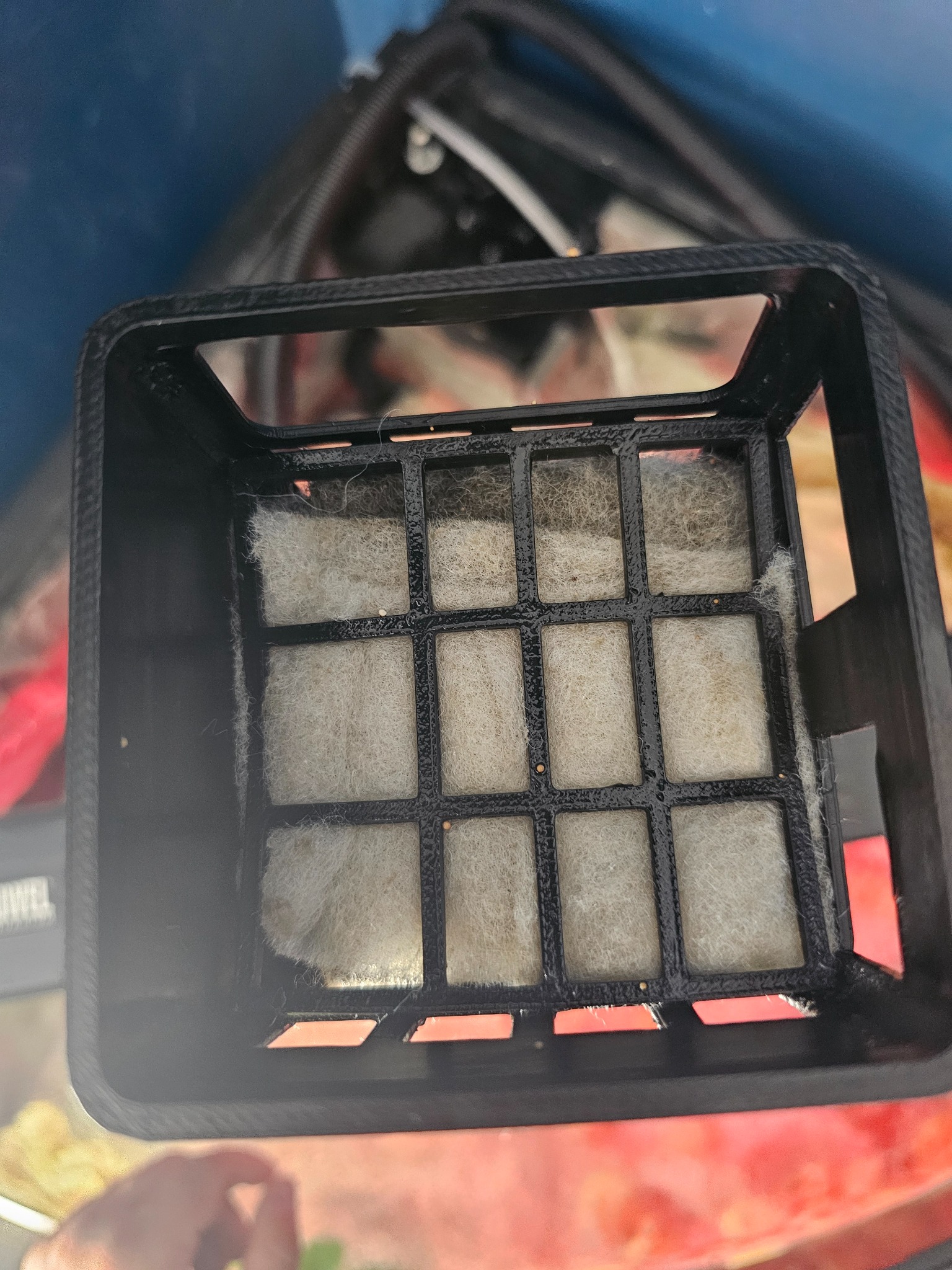
This short video shows how the caddy can be removed after the first week. It helps demonstrate handling and access, but it is still practical prototype evidence rather than a formal usability certification.
The aquarium appears visibly clear in the confirmed Day 7 photograph. This is useful development evidence from one real aquarium, not proof of a guaranteed or isolated filtration result.
This image and video were recorded close to the two-week mark. They are useful evidence that the aquarium still appeared clear, but the red lighting means they should not be used as the primary direct colour comparison against the earlier blue/white photographs.
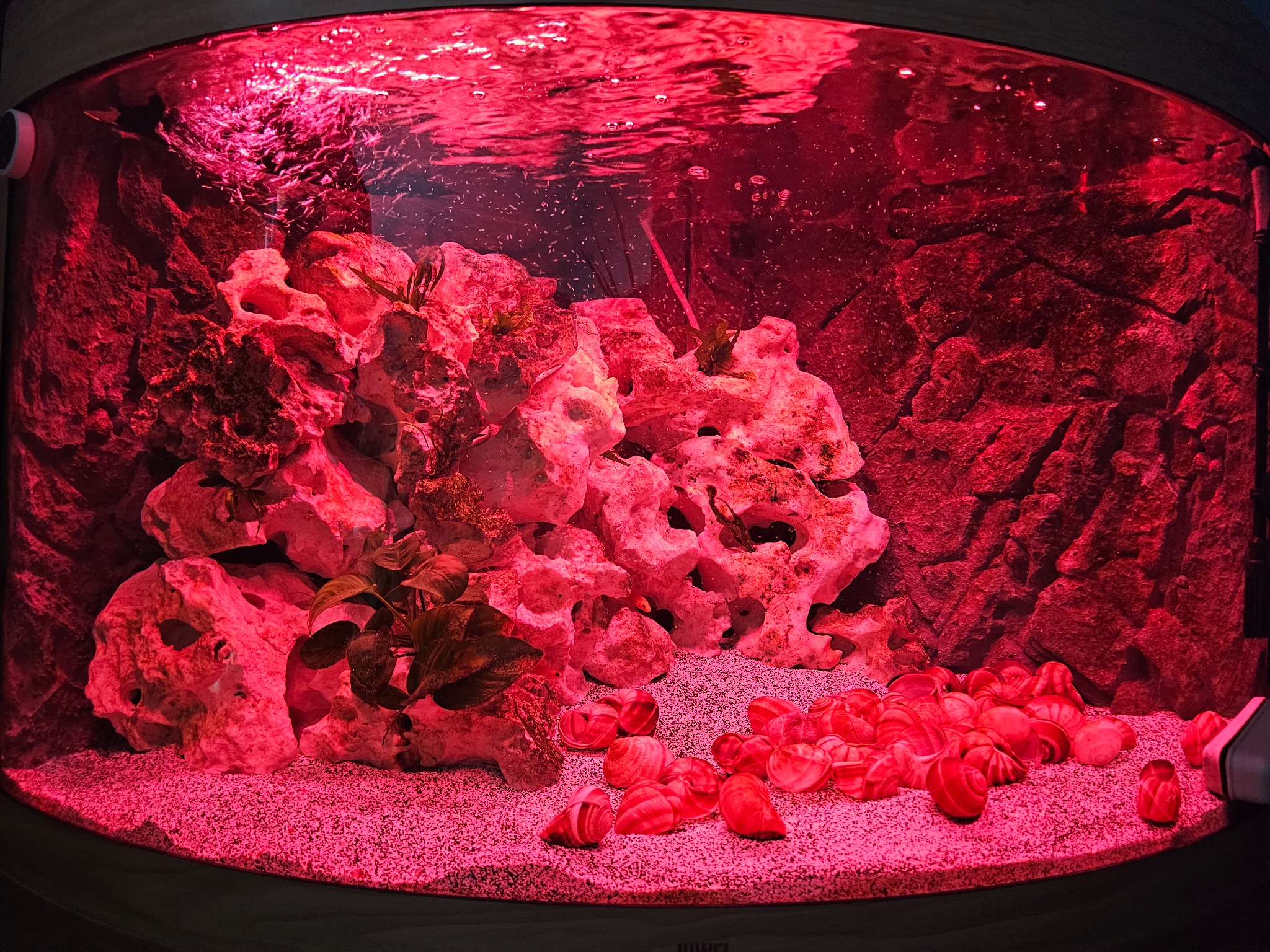
The water appears clear in this later record and the video adds movement rather than relying on a single still image. Because lighting colour, exposure and camera angle affect appearance, the evidence is labelled honestly as a red-light observation.
Repeat one photograph and one short video from the same position, at the same time of day and under the same blue/white lighting used for the earlier records. That will make the two-week comparison substantially stronger and more credible.
Join for product launches, care guides, Tank Passport updates and the occasional offer. No daily spam.
Ten connected enhancements now bring the visual polish, quick actions and aquarium-centred experience into one system.
Authentic Stonehouse tank imagery replaces generic placeholder styling in this showcase area.


Use these areas later for product close-ups, fit demonstrations and verified before-and-after results.
Badges are now available as a reusable component for product and guide cards. Claims remain limited to what has actually been verified.
Move the cards into the order that suits you. The layout is remembered on this device.
Your saved tank becomes the centre of fish screening, maintenance, water history and product compatibility.